
Available 24 hours a day, 7 days a week

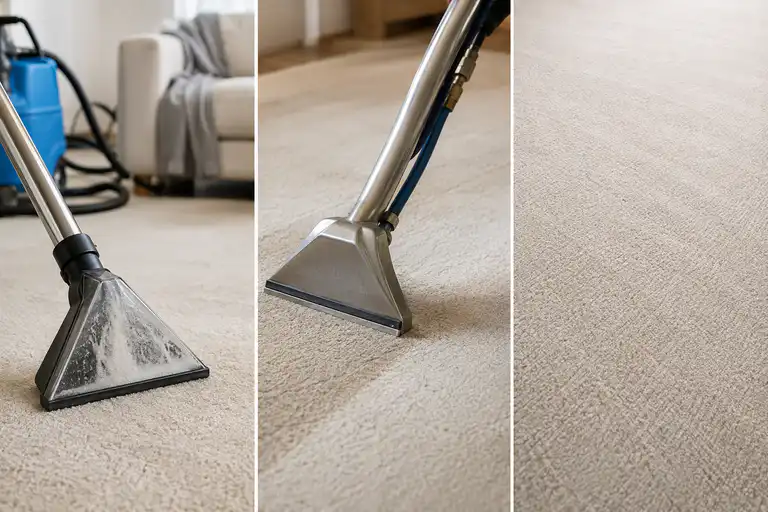
Hot Water Extraction vs Steam vs Low-Moisture Carpet Cleaning
Carpet-cleaning terms are often used as if they mean the same thing, but hot water extraction, true steam treatment and low-moisture cleaning are different processes. There is no single best carpet cleaning method for every home in Ireland. The right approach depends on fibre, construction, staining and drying requirements.
Table of Contents
Why Carpet Cleaning Methods Are Often Confused
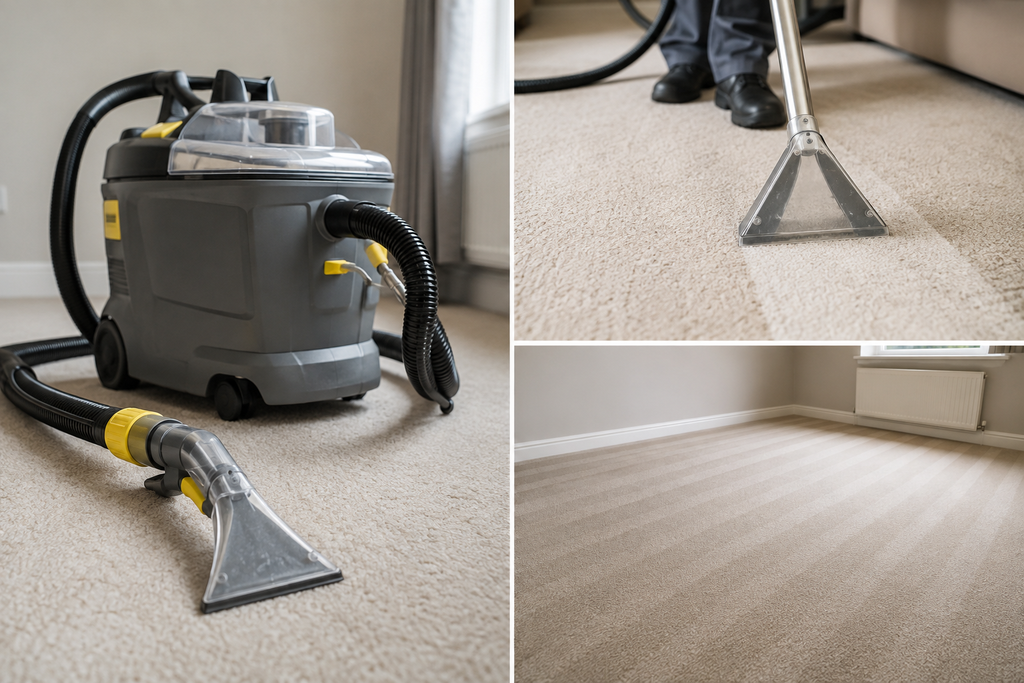
“Steam cleaning” is often used broadly for carpet cleaning with heated water. In practice, a company may actually be using hot water extraction: water and solution are introduced, then recovered through suction. True steam treatment uses steam or vapour, so the terms are not identical.
What Is Hot Water Extraction?
Hot water extraction involves:
- pre-treatment;
- controlled water or solution application;
- agitation where required;
- extraction of suspended soil and moisture;
- drying.
The key stage is extraction: moisture is recovered together with loosened soil. It can suit embedded dirt and some stains, but suitability still depends on the carpet.
What Is Low-Moisture Carpet Cleaning?
Low-moisture carpet cleaning uses less water than a typical extraction process. This can shorten drying time where fast turnaround matters. It is not inherently better or worse; results depend on soil level, construction and the system used.
What Does “Steam Cleaning” Actually Mean?
True Steam Cleaning
True steam cleaning uses steam or vapour. Suitability depends on the material and equipment; it should not automatically be assumed to disinfect or suit every carpet fibre.
Hot Water Extraction Marketed as Steam Cleaning
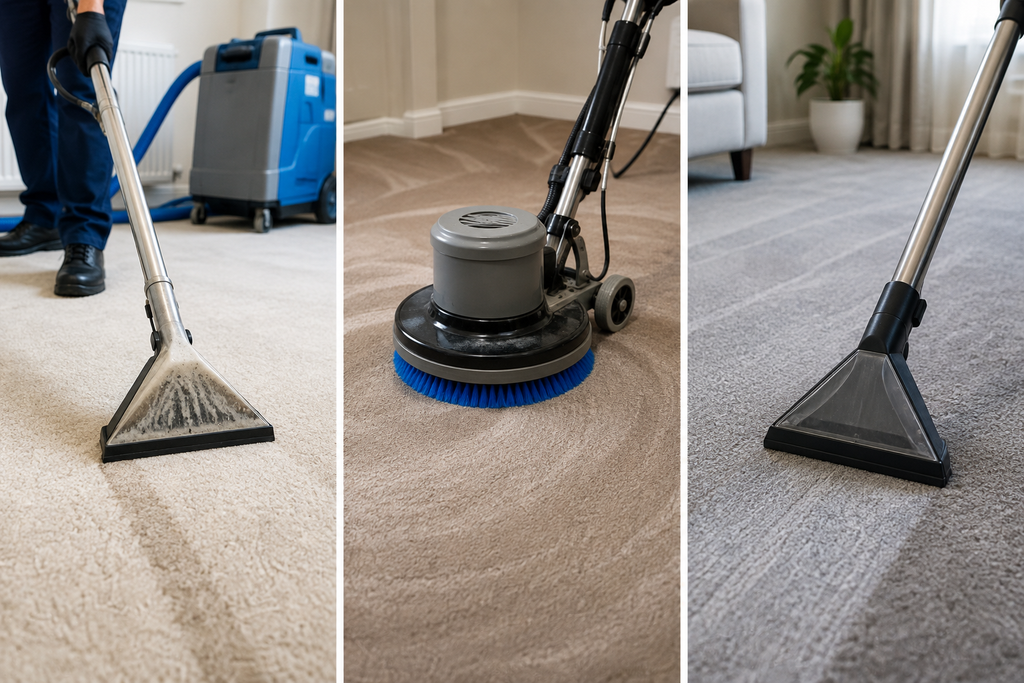
Many people call hot water extraction “steam cleaning” because heated water or vapour can be visible. Technically, extraction means controlled water application followed by recovery of moisture and soil. Ask what process is actually being used rather than relying on the service name.
Which Method Works Best for Different Carpets?
| Situation | Main consideration |
| Synthetic carpet | Construction, staining, moisture tolerance |
| Wool carpet | Fibre sensitivity, colour stability, controlled moisture |
| Heavy staining | Type, age and depth of contamination |
| Quick turnaround | Drying-time requirements |
| Rental property | Condition, access and handover schedule |
Synthetic Carpets
Synthetic fibres differ from natural fibres, but backing and construction still matter. Not every synthetic carpet should automatically be extracted.
Wool and Delicate Fibres
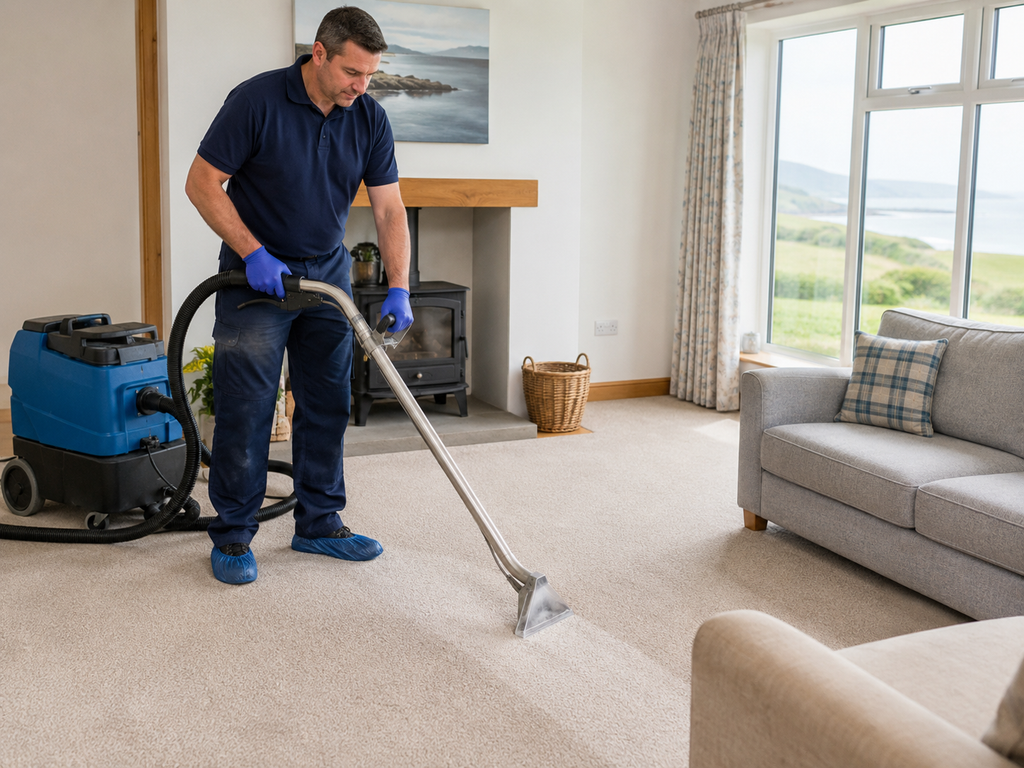
Wool and delicate fibres need careful control of moisture, temperature and chemistry. Colourfastness, shrinkage or distortion risk should be considered. Wool can be professionally cleaned, but the method must suit the material.
Heavy Staining
Stain type, age, depth, previous cleaning attempts and below-surface contamination also affect method choice. See our guide to pet stain and odour removal.
Hot Water Extraction vs Low-Moisture Cleaning
| Factor | Hot Water Extraction | Low-Moisture |
| Water use | Higher | Lower |
| Extraction | Yes | Depends on system |
| Drying | Usually longer | Often faster |
| Heavy soil | Can be suitable | Depends on condition |
| Delicate fibres | Requires assessment | Requires assessment |
Drying-Time Comparison
Drying time depends on fibre, pile, moisture recovery, indoor humidity, airflow, heating and room conditions — not only the method. See our guide to how long professionally cleaned carpets take to dry.
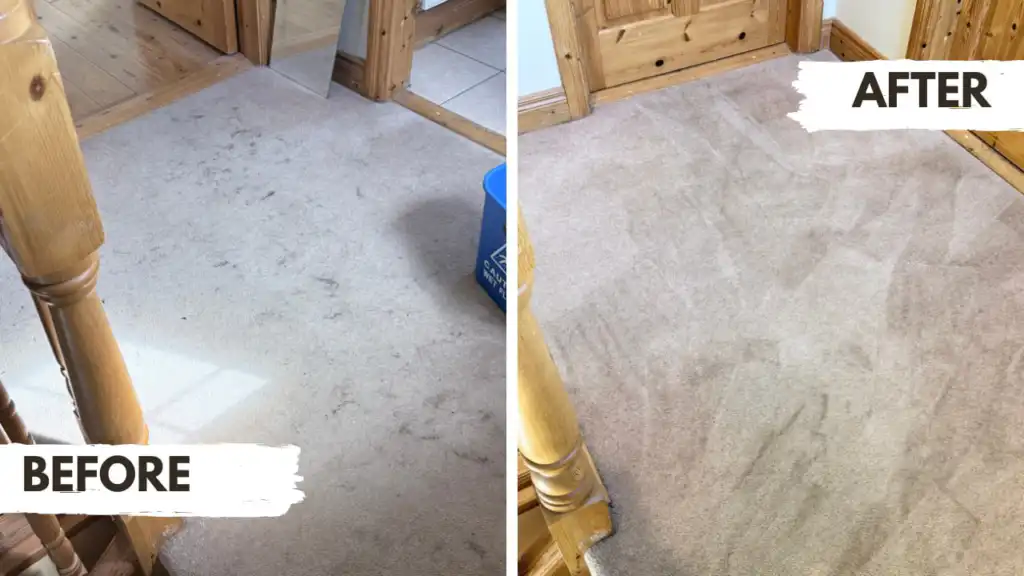
Which Carpet Cleaning Method Is Best for Kerry Homes?
For homes in Tralee, Killarney and across County Kerry, method selection should consider fibre, staining, moisture sensitivity and turnaround. Professional assessment is more useful than choosing by name.
What Method Does DNK Cleaning Use?
DNK Cleaning does not apply the same cleaning method to every carpet. The process starts with a free initial assessment so the carpet can be evaluated before treatment begins.
Where required, the team can inspect the carpet on site and assess:
- the carpet fibre and construction;
- the condition of the pile and backing;
- the level of general soiling;
- the type, age and severity of stains;
- areas with heavier traffic or embedded dirt;
- signs of previous cleaning or treatment;
- moisture sensitivity and drying requirements;
- any areas that may require more careful or specialist treatment.
This assessment helps determine which cleaning approach is most appropriate for the individual carpet rather than selecting a method simply by its marketing name.
For example, a heavily soiled synthetic carpet may require a different approach from a wool carpet, a delicate fibre or a carpet with localised staining. In some cases, stain treatment, controlled moisture use or a different cleaning technique may be required. The final method is therefore selected according to the material, construction, condition and level of contamination found during the assessment.
If you are unsure what type of carpet you have, send DNK Cleaning a few clear photographs, your Eircode and basic room details. We can provide an initial assessment and advise whether an on-site inspection is needed before cleaning.
Professional Carpet Cleaning Across County Kerry
DNK Cleaning serves Tralee, Killarney, Dingle, Listowel, Castleisland and wider Kerry. See the latest Google reviews and professional carpet cleaning in Kerry.
Price
- Carpet cleaning — from €40 per room*
Final quotation depends on carpet size, condition, staining and any specialist treatment required.
Not Sure Which Cleaning Method Your Carpet Needs?
Send your Eircode, number of rooms, approximate room sizes, clear photographs, staining details and the carpet material if known.
Call or WhatsApp: +353 87 965 4320
We can review the details and advise on the next step. An inspection may be required before the method is confirmed.
FAQ
Is hot water extraction the same as steam cleaning?
Not technically. Hot water extraction introduces water or cleaning solution and then extracts moisture and suspended soil. “Steam cleaning” is often used as a general marketing term for extraction, while true steam treatment uses steam or vapour.
Which carpet cleaning method is best?
There is no universally best method. Fibre type, carpet construction, staining, moisture tolerance, previous treatments and drying requirements all affect suitability.
Is hot water extraction safe for wool carpets?
It can be appropriate for some wool carpets when moisture, chemistry and other process variables are properly controlled. The carpet should be assessed before treatment rather than assuming extraction is suitable for every wool carpet.
Does low-moisture carpet cleaning clean as deeply?
That depends on the carpet, soil type and low-moisture system being used. Less water does not automatically mean either better or poorer cleaning.
Which carpet cleaning method dries fastest?
Low-moisture systems often dry faster because less water is introduced. Actual drying time also depends on fibre, pile, moisture recovery, airflow, temperature and indoor humidity.