
Monday to Saturday - 9am to 9pm

Interior painting in Kerry: how to avoid streaks, lap marks, and patchy walls
Interior painting looks simple until the wall dries and tells the truth. Under side light, streaks appear like fingerprints. Lap marks show where one section dried before the next one landed. Patchy walls reveal a familiar Kerry story: older surfaces, repairs done in a hurry, and rooms that dry unevenly because heating and humidity don’t behave like they do in a lab.
At DNK Cleaning, we see the same issues again and again in homes across Kerry. People often blame “bad paint.” In reality, most paint failures are workflow failures: prep skipped, primer ignored, tools chosen for speed, and technique that breaks the single rule that matters most — control the wet edge.
This guide explains what causes streaks, lap marks, and patchy walls, and how to prevent them. It’s practical, not romantic. The goal is a finish that looks clean in daylight and still looks clean at night with the lamp on.
Table of Contents
Why Interior Paint Jobs Fail Even With “Good Paint”
Most issues start before the first brush stroke
Paint is not a magic cover. It’s a thin, honest layer. If the wall is dusty, greasy, uneven, or absorbing paint at different rates, the finish will expose it. Think of paint like a camera filter: it doesn’t remove texture; it highlights it.
Many DIY jobs fail because preparation is treated as optional. But the finish is decided before the first coat dries.
Light in Irish homes makes flaws more visible
Kerry homes often have strong directional light. A window on one side, a lamp in the corner, downlights pointing at a feature wall — these conditions create side lighting that exaggerates every roller line and every uneven patch.
If you paint under soft light and judge the finish under harsh light later, it will feel like the wall changed overnight. It didn’t. The lighting just stopped being forgiving.
The Three Most Common Finish Problems
Streaks
Streaks are visible lines or bands where the coat is not even. They often come from:
- A roller that’s too dry or overloaded in spots
- Uneven pressure
- Painting over semi-dry paint
- Low-quality roller sleeves that don’t distribute paint consistently
Lap marks
Lap marks are darker or shinier lines where wet paint overlaps paint that has already started to dry. The wall ends up with “seams,” like a badly joined wallpaper.
This usually happens when:
- You stop mid-wall and come back later
- You work in random patches
- The room is warm or air is moving too fast
- The paint is drying quicker than expected
Patchy walls
Patchiness is when the wall dries with uneven colour or sheen. The common causes:
- Bare plaster or filler spots absorbing paint differently
- Old paint and new repairs behaving like different materials
- No primer where it was needed
- Not enough coats to level out the surface
Patchiness is especially common after small repairs. The repair looks smooth, so people paint it. Then it dries and announces itself like a badge.
Local Factors in Kerry That Affect Interior Painting
Humidity and slow drying
Humidity can slow drying and extend the time paint stays tacky. That sounds helpful, but it can create its own problems. A coat that stays wet too long attracts dust. It can also drag when you go back over it, leaving texture marks.
Older plaster, repairs, and uneven absorption
Many Kerry homes have a mix of surfaces: older plaster, modern filler, patched cracks, skim coats, and areas previously painted with different finishes. Each absorbs paint differently. Without primer and consistent prep, the wall becomes a patchwork underneath the paint.
Heating patterns and condensation
Some rooms heat quickly. Others stay cold. Corners may hold moisture longer. These micro-conditions change how paint levels and dries across a single wall, which increases the risk of lap marks and uneven sheen.
Surface Prep That Actually Prevents Patchiness
Cleaning matters more than people think
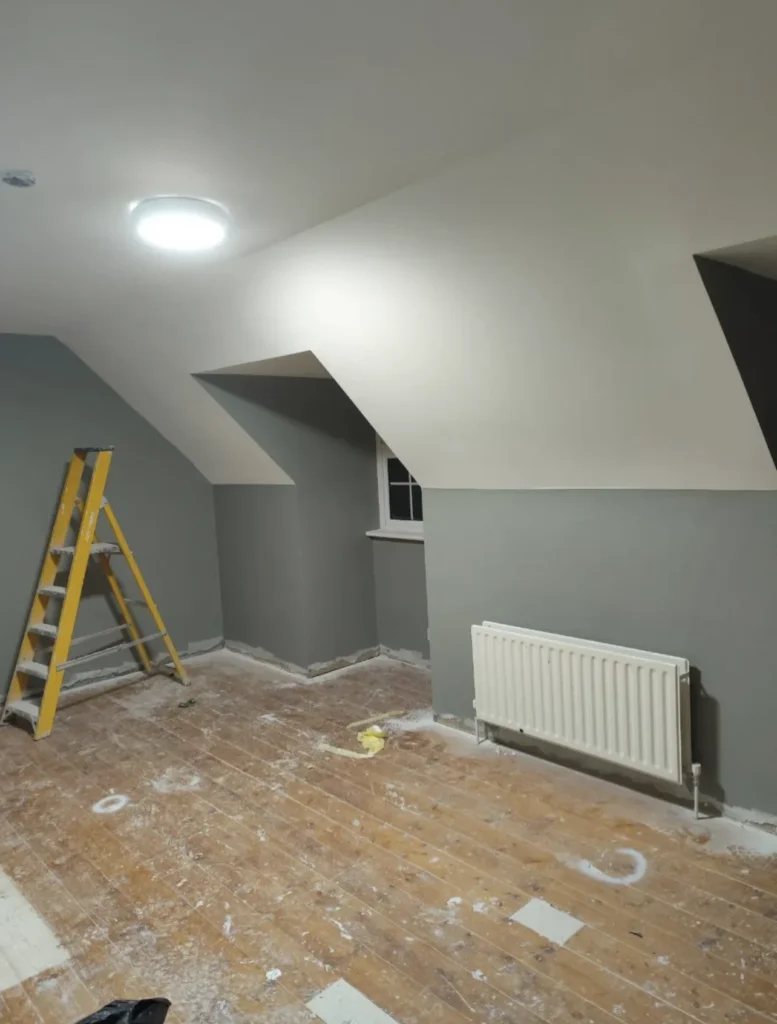
Dust and invisible grime are common. Kitchens, hallways, and rooms near fireplaces or stoves collect residue that paint won’t bond to properly.
Before painting:
- Wash walls where there’s grease, smoke, or fingerprints
- Rinse if needed
- Let the wall fully dry
Painting over dirt is like applying fresh plaster over loose dust. It may look fine for a week. It won’t age well.
Filling, sanding, and feathering edges
Most patchiness starts at the edge of the filler. If you can feel an edge with your hand, you will likely see it after painting.
Key rule: feather the repair beyond the obvious spot. Sand gradually. Don’t create a hard boundary where new material meets old paint.
The “hand test” for flatness
Run your palm lightly over the wall. Your hand is a better inspector than your eyes. If it feels uneven, it will show under side light after painting.
Primer: When It’s Non-Negotiable
New plaster and repaired spots
Fresh plaster and filler are thirsty. They pull moisture from paint instantly, which causes uneven drying and dull patches. A proper primer or mist coat creates a consistent base so the top coats behave the same across the wall.
Stains, nicotine, and water marks
If stains bleed through, they can show as yellowing, shadowing, or uneven tone. Use a stain-blocking primer on the affected area or the entire wall, depending on severity.
Colour changes and high-contrast walls
Covering a dark wall with a light colour often takes more coats than people expect. Primer helps reduce coat count and improves evenness, especially when the old colour is strong.
Choosing the Right Paint Finish for Real Homes
Matt vs. silk vs. eggshell
- Matt hides small imperfections better but can mark more easily in high-traffic areas.
- Silk reflects more light and can highlight flaws.
- Eggshell often offers the best balance: easier cleaning than matt, less glare than silk.
What we recommend for busy rooms
In homes with kids, pets, and constant movement, walls get touched. A durable finish makes maintenance easier. Picking the right sheen is like choosing the right shoes: it’s not just about style, it’s about where you’ll be walking.
Tools and Materials That Reduce Streaks
Roller nap length
The nap is the thickness of the roller cover. Too short and it won’t hold enough paint, causing drag and streaks. Too long and it can leave texture. Match the nap to the wall texture. Smooth walls need a shorter nap; rougher walls need more.
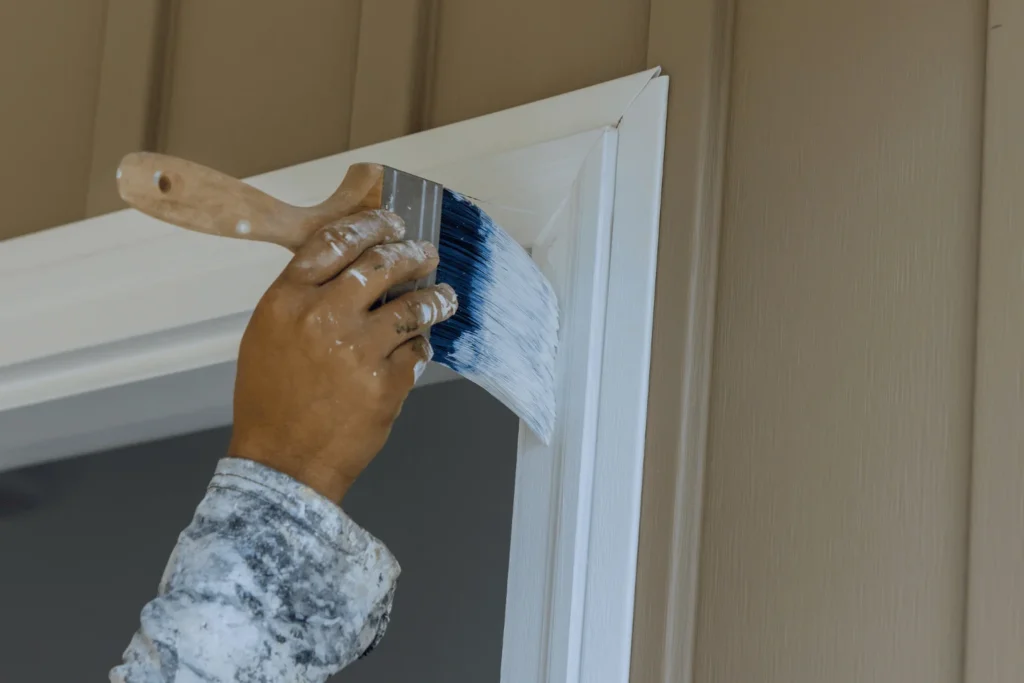
Quality brushes and cutting-in
Cheap brushes shed bristles and struggle to hold paint evenly. They can also leave visible brush lines along edges. Cutting-in is not a separate art. It’s part of blending. If the cut line dries before rolling meets it, you’ll get a visible border.
Extension poles and wet edge control
An extension pole improves consistency. It helps maintain the same pressure and stroke pattern, which reduces roller marks. It’s also faster, which matters because time is the enemy of the wet edge.
Technique: How to Stop Lap Marks
Keep a wet edge
Lap marks happen when wet paint meets paint that is already drying. The solution is simple to say and difficult to execute: work fast enough to keep the edge wet.
Do not paint a wall in “islands.” Paint it in a controlled pattern.
Work in sections, not “random areas”
Choose a section and finish it while it’s still open. Roll from top to bottom, maintain overlap, and don’t stop mid-wall unless the wall ends there.
Timing rules by room size
Small rooms can still cause lap marks because you stop to cut in and the first area starts drying.
A practical rule:
- Cut in one wall, then immediately roll that wall.
- Repeat wall by wall.
- Avoid cutting in the entire room first unless you have a second person rolling behind you.
Fixing Patchy Walls
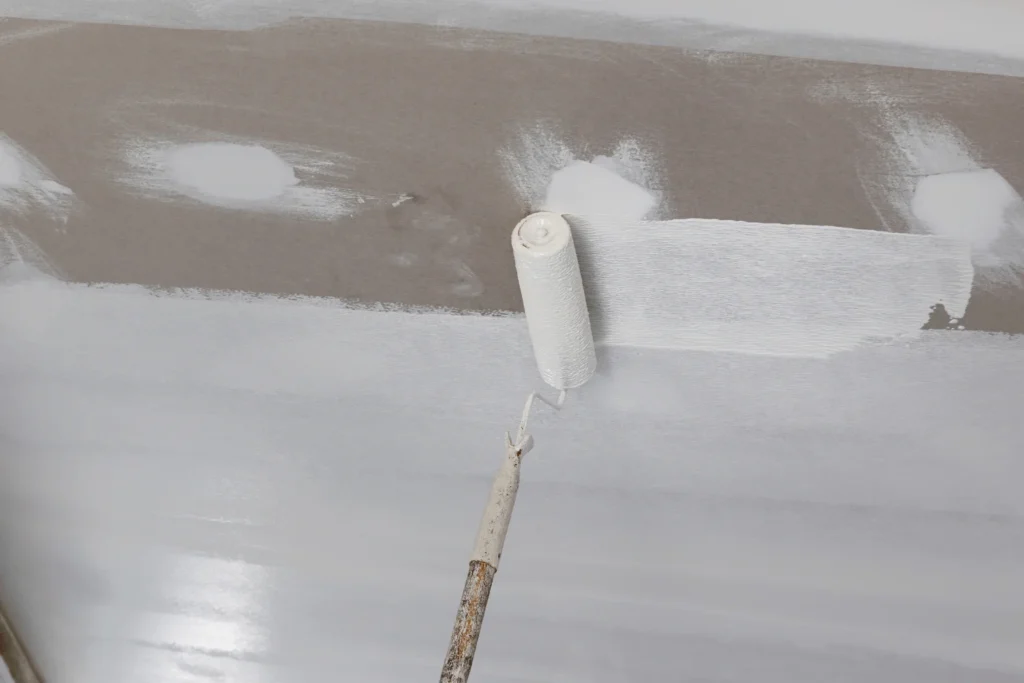
Diagnosing absorption vs. texture
If the patch is duller, it’s often absorbed. If the patch is shinier or rougher, it can be texture or sanding differences.
Fix depends on cause:
- Absorption: prime and repaint
- Texture: sand and feather, then prime and repaint
How many coats are really needed
Two coats is standard, but not a law. Over repairs, colour changes, or uneven surfaces, you may need more. The goal is uniformity, not a number.
Think of coats like layers of insulation. One thin layer rarely solves the problem. The finish becomes stable when the wall stops behaving like multiple materials.
Cutting In Without Leaving Borders
Why borders happen
Borders happen when cutting-in dries before rolling meets it, or when the cut area has a different thickness or texture than the rolled area.
Blending the cut line into the rolled area
After cutting in, roll close enough to overlap while the cut line is still wet. Use a smaller roller for precision if needed. Don’t treat edges as a separate “frame.” A good wall finish has no obvious border.
Lighting: The Hidden “Inspector”
Side light shows everything
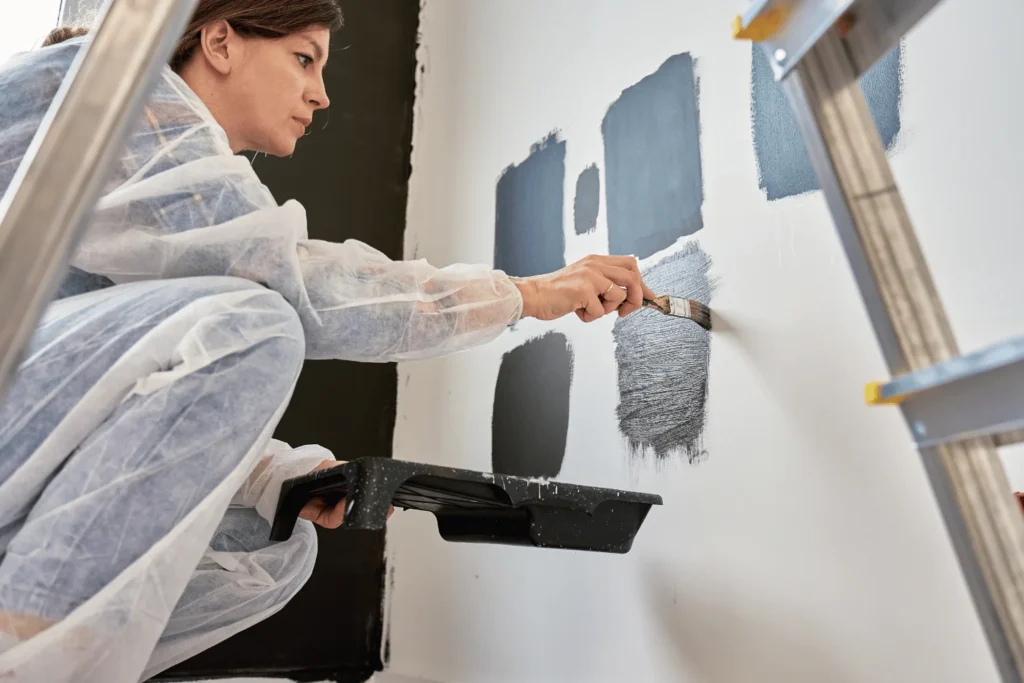
Side light is a harsh judge. It will show roller lines, raised filler edges, and uneven sheen.
What to do before you call it finished
Before you pack up:
- Check the wall under the strongest light in the room
- Look from different angles
- Inspect near windows and under downlights
If you only check straight-on, you will miss problems that become obvious later.
Drying and Recoat Times in Kerry Homes
Why rushing causes drag and marks
If the first coat isn’t dry enough, the roller can pull it, leaving drag marks and texture. It can also create shine differences where the paint film is disturbed.
Ventilation without dust
Ventilation helps, but strong drafts can dry one area faster than another, increasing lap mark risk. Keep airflow gentle. Avoid heavy dust movement while paint is tacky.
Room-by-Room Risk Points
Kitchens
Grease and steam affect adhesion. Clean properly and consider durable finishes.
Bathrooms
Humidity and condensation are constant. Use moisture-resistant paint systems and make sure the room is well ventilated.
Hallways and stairs
These areas get touched and scuffed. Durability matters more than perfect flatness.
Ceilings
Ceilings show lap marks quickly because people paint them slowly. Use the right roller, work fast, and keep a consistent wet edge.
What Kerry Homeowners Should Look For
Proper quotes, scope, and prep details
A reliable painting service explains prep steps, primer usage, number of coats, and what is included. If the quote is vague, the finish often is too.
Proof photos and consistent standards
Before/after proof matters. It shows consistency, not just promises. In local markets, reputation travels faster than ads.
When DIY Becomes More Expensive Than Hiring Pros
The cost of rework
Paint rework costs time, materials, and frustration. Fixing lap marks can mean sanding and repainting entire walls, not “touching up.” Patchy walls often require primer and additional coats.
Common “quick fixes” that fail
- Adding extra paint only to the patch (creates a visible halo)
- Rolling over half-dry paint (creates texture and sheen changes)
- Skipping primer because “it looks fine”
Quick fixes behave like cheap tape on a leaking pipe. It holds until it doesn’t.
How DNK Cleaning Approaches Interior Painting in Kerry
Method, consistency, and before/after proof
Our approach is straightforward: consistent prep, correct priming, controlled technique, and clean finishing. We document results with before/after proof because homeowners need clarity, not guesswork.
Clean work, low disruption, predictable results
Interior painting shouldn’t turn a home into a construction site. We keep work areas clean, protect floors and furniture, manage dust, and focus on finish quality under real lighting — not just in “ideal conditions.” People in Kerry don’t want anonymous promises. They want predictable work, clear communication, and results that hold up when the light hits the wall.
Book now
Conclusion
Streaks, lap marks, and patchy walls are not mysterious problems. They are predictable outcomes of rushed prep, skipped primer, poor tools, and broken technique — especially in real Kerry homes where humidity, older surfaces, and directional light expose every shortcut. If you control the surface, control the wet edge, and treat priming as part of the system rather than an optional extra, you can get a finish that looks even, clean, and durable. Interior painting is not about luck. It’s about the process.
FAQs
Why do lap marks appear even when I use the same paint and roller?
Because the overlap happened after the first area started drying. Same paint doesn’t matter if timing breaks the wet edge.
Can I fix patchy walls with one extra coat?
Sometimes, but only if the base is consistent. If patchiness is caused by absorption differences, you usually need primer first.
Should I always use primer on repaired areas?
In most cases, yes. Repairs absorb paint differently, and primer helps the wall behave as one surface.
Why do my walls look fine in daylight but bad at night?
Side lighting from lamps and downlights highlights texture and sheen differences. Always inspect under strong, directional light.
What’s the fastest way to avoid streaks on smooth walls?
Use the right roller nap, keep consistent pressure, avoid overworking semi-dry areas, and maintain a wet edge from start to finish.