
Monday to Saturday - 9am to 9pm


Power Washing in Tralee: Clean Timber Without Damaging the Surface
Power Washing in Tralee can restore timber decking, fences, and cladding — if it’s done with restraint and a method built for wood, not concrete. Timber has grain, soft zones, and weathered fibres that react unevenly to force, so the same pressure that cleans a driveway can raise the grain, carve lines, and leave splinters behind. At DNK Cleaning, we focus on controlled cleaning: the lowest effective pressure, the correct nozzle, the right distance, and — when needed — soft-wash chemistry to lift algae and grime without tearing the surface.
If you want timber that looks refreshed, not shredded, the method matters.
Table of Contents

Why Timber Needs a Different Approach
Timber is “Alive” Compared to Concrete
Concrete is dense and relatively uniform. Timber is not. Even treated wood changes as it ages — expanding, contracting, drying, and absorbing moisture. That movement creates small cracks, raised grain, and soft weathered sections. When pressure hits those weak points, it doesn’t just clean. It tears.
Think of wood like a book with pages (the grain). If you blow air too hard across the pages, they lift and fray. Water pressure behaves the same way, especially on older decking.
The Hidden Risks of High Pressure
A pressure washer can remove dirt quickly, but it can also:
- Lift the grain and leave a rough “furry” texture
- Cut grooves into boards (etching)
- Force water deep into joints and end-grain
- Strip protective oils, stains, and sealants unevenly
The damage often looks minor on the day. A week later, when the timber dries, the surface turns harsh, uneven, and harder to restore.
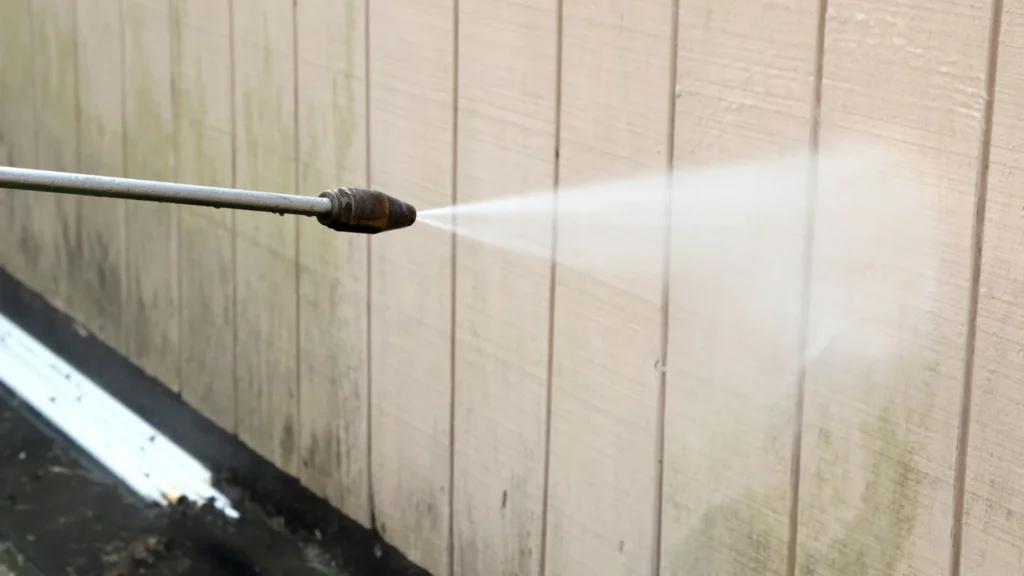
Common Timber Surfaces We Clean in Tralee
Tralee homes and gardens have a predictable set of timber surfaces, and each one has its own risk profile.
Timber Decking
Decking is the most common request — and the most frequently damaged by DIY washing. Boards are exposed, weathered, and typically host algae in shaded areas. Cleaning must be controlled and consistent, or the deck ends up striped and splintered.
Fences and Gates
Fences often have softer timber, older stains, and uneven exposure to wind and rain. A strong jet can remove stains in patches, leaving a “leopard print” effect across panels.
Garden Furniture and Pergolas
Furniture has edges, joints, and softer sections that don’t respond well to impact. Pergolas and frames are often higher up, where overspray becomes an issue for windows, walls, and nearby planting.
Sheds, Cladding, and Timber Facades
Timber cladding needs an especially careful approach because water intrusion matters. The wrong technique pushes moisture behind boards and into gaps — exactly where rot and mould want to live.

What Actually Damages Timber During Power Washing in Tralee
Furring and Splintering
This is the classic outcome: wood fibres lift and stand up after washing, giving a fuzzy surface. It doesn’t just feel rough — it traps dirt faster and increases the chance of splinters.
Etching the Grain
When pressure is too high, the washer carves into the softer parts of the grain. That creates visible lines and grooves. Once etched, timber usually needs sanding to look right again.
Forcing Water Into the Boards
End-grain (board ends) absorbs water quickly. High pressure accelerates that absorption. Water gets into cracks and joints, and when it dries, it can worsen splits. In cold conditions, trapped moisture can lead to longer-term damage.
Stripping Oils and Protective Coatings
Many decks and fences are oiled or stained. Poor technique strips those coatings unevenly. Then you’re left with a patchy surface that needs extra prep before it can be resealed.
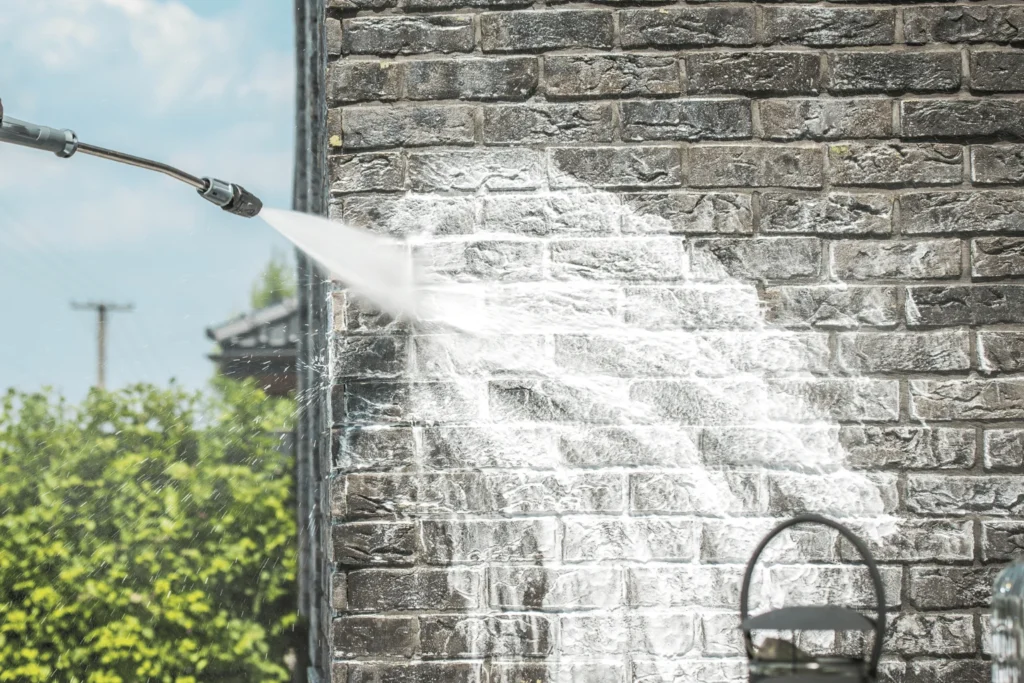
Pressure Washing vs Soft Washing for Wood
When Low Pressure Is the Only Safe Option
Soft washing uses low pressure paired with appropriate cleaning solutions to break down organic growth. It’s ideal for:
- Older decking with raised grain
Painted or stained timber where you don’t want stripping - Cladding where water intrusion is a concern
- Timber near delicate landscaping
In these cases, aggressive pressure isn’t “strong cleaning.” It’s just damage delivered faster.
When Controlled Pressure Works
There are times when controlled pressure is suitable — especially on sound, well-maintained decking with thick boards. The key word is controlled.
How We Adjust PSI, Nozzles, and Distance
At DNK Cleaning, we adjust three core variables:
- PSI (pressure): enough to lift contaminants, not enough to carve
- Nozzle selection: wider fan patterns for timber, avoiding aggressive tips
- Distance and angle: cleaning from a safe distance, at an angle that lifts dirt without cutting fibres
This is the difference between “washing” and “blasting.” They are not the same job.

DNK Cleaning Method: Safe Timber Cleaning in Tralee
Inspection First, Always
We look at:
- Timber type (softwood vs hardwood)
- Age and weathering
- Existing coatings (oil, stain, paint)
- Areas of algae, black spots, or moss
- Loose boards, nails, splinters, and gaps
That inspection decides whether we use a soft wash approach, controlled pressure, or a hybrid method.
Pre-wet and Protect Surroundings
We pre-wet timber to reduce aggressive absorption. We also protect:
- Plants and flower beds
- Nearby windows and doors
- Metal fixtures that can stain or react
- Outdoor electrical points where splash risk exists
Apply the Right Solution
Organic growth doesn’t just “rinse off.” Algae and biofilm cling to wood fibres. A suitable solution loosens it, so we can rinse without force.
Gentle Rinse and Grain-Aware Technique
We clean with the grain, maintaining consistent motion. That reduces striping and prevents fibre lift. If the surface starts showing stress, we step back — literally and methodologically.
Controlled Drying and Aftercare
Timber needs time to dry before it can be oiled or sealed. We advise on:
- Drying time expectations
- Whether re-oiling is needed
- How to prevent quick regrowth in shaded areas
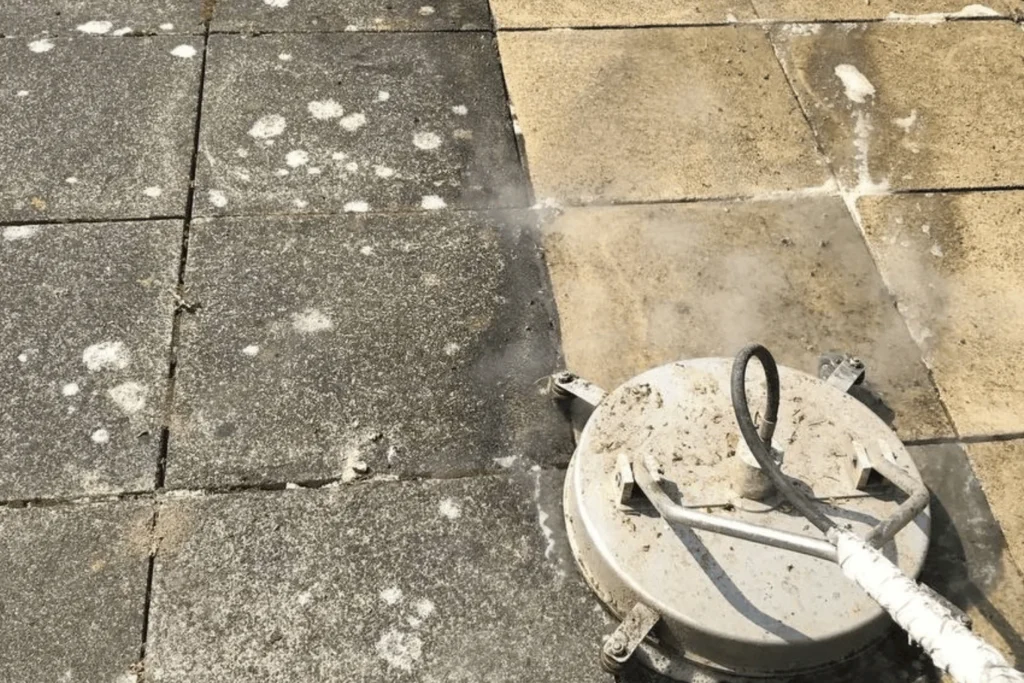
Step-by-Step: How We Clean Timber Without Harm
Step 1 — Identify Timber Type and Condition
Softwoods mark faster. Older boards lift easier. Coated surfaces react differently. You can’t treat them the same.
Step 2 — Spot-Test a Discreet Area
This is where most DIY jobs fail: they commit to full power without testing. We test first, then scale.
Step 3 — Use Correct Nozzle and Angle
A wide fan pattern reduces impact concentration. We keep a safe angle so water flows along the surface rather than punching into it.
Step 4 — Clean With the Grain
Cleaning against the grain encourages fibre lift. The grain keeps the surface smoother and the results more even.
Step 5 — Final Rinse and Neutralise If Needed
Depending on the solution used and surface type, neutralising can help protect timber and keep the finish consistent.
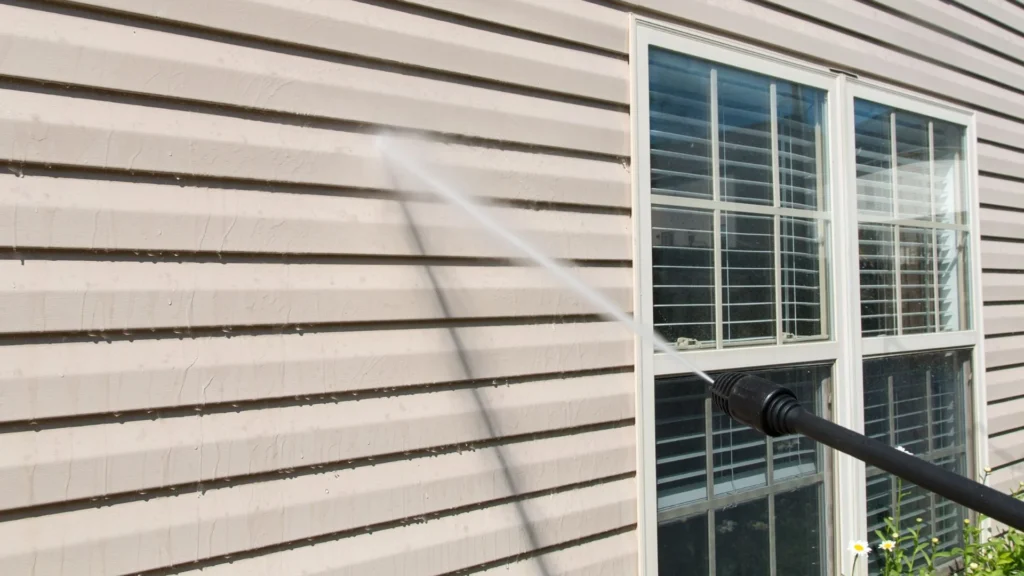
What to Expect After Timber Cleaning
Colour Changes and “Fresh Timber” Look
Removing algae and grime can make timber look lighter. That’s not bleaching — it’s simply the real colour returning. If the timber was previously oiled, it may look “unfinished” until re-oiled.
Drying Time in Tralee Weather
Tralee’s damp conditions can slow drying, especially in shaded gardens. Timber may need extra time before any coating is applied. Rushing that step locks moisture in.
When Re-Oiling or Resealing Makes Sense
If the timber was previously protected, cleaning can expose where protection is thin. Re-oiling after proper drying often gives the best long-term outcome.
DIY Power Washing Timber: What Homeowners Get Wrong
The “Closer is Better” Mistake
The closer the nozzle, the more concentrated the force. On wood, that’s how grooves happen.
Using a Turbo Nozzle on Wood
Turbo nozzles are designed for hard surfaces. On timber, they’re a fast track to irreversible etching.
Washing Painted or Stained Timber Incorrectly
If you hit coated wood with strong pressure, you don’t “clean it.” You partially strip it. That creates patchiness that looks worse than the original dirt.
Skipping Protection for Plants and Fixtures
Runoff and overspray can stress plants and stain adjacent materials. Professional work treats the whole area, not just the timber.
How Often Should Timber Be Cleaned in Tralee?
Coastal Moisture, Moss, and Algae Growth
Even if you’re not right on the coast, the local moisture cycle supports algae in shaded spots. Timber surfaces collect biofilm faster than many people expect.
A Simple Seasonal Schedule
A practical approach:
- Spring: clean to reset the surface after winter
- Late summer / early autumn: light clean if growth returns quickly in shade
Frequency depends on exposure, tree cover, and whether the timber is sealed.
Safety and Environmental Considerations
Runoff Control
Cleaning solutions and loosened organic growth should not be left to drain uncontrolled. Responsible runoff management protects surrounding soil and surfaces.
Pet- and Plant-Safe Products
We choose products with safety in mind and apply them with controlled dilution and targeted coverage.
Responsible Wastewater Practices
Good cleaning isn’t just about the visible result. It’s also about how the job is handled from start to finish, including residue and disposal.
Why Choose DNK Cleaning for Power Washing in Tralee
Local Experience With Irish Conditions
Irish weather isn’t gentle on wood. We clean with that reality in mind: moisture cycles, algae growth, and variable drying conditions.
Equipment That Allows Precision
A “one-setting” washer is a blunt instrument. We use equipment and setups that allow controlled application.
Results You Can Verify With Before/After Photos
Proof matters. Before/after photos make the outcome clear and set realistic expectations — especially for older timber where “like new” is not always possible, but “clean and safe” absolutely is.
Book a Timber-Safe Power Wash in Tralee
If you want timber cleaned without splintering, striping, or surface damage, DNK Cleaning can help.
- WhatsApp: Message us for a quick quote and available slots.
- Form below: If you prefer, fill in the form below with your location in Tralee, the timber surface type (decking/fence/cladding), and a few photos for an accurate estimate.
Conclusion
Power washing timber in Tralee is not about maximum force. It’s about controlled cleaning that respects the material. Timber can look dramatically better after a proper clean — free of algae, grime, and staining — without ending up rough, etched, or weakened. At DNK Cleaning, we use the safest effective method for each surface, combining technique, suitable solutions, and controlled pressure when appropriate. If you want timber that looks refreshed and stays structurally sound, the process is the product.
FAQs
Can power washing ruin a timber deck?
Yes. High pressure can splinter the surface, lift the grain, and etch grooves into boards. Controlled pressure or soft washing is often safer.
Is soft washing better than pressure washing for wood?
In many cases, yes. Soft washing uses low pressure and cleaning solutions to break down algae and grime without physically damaging timber fibres.
How long should timber dry after cleaning?
It depends on weather and shade. In Tralee conditions, drying can take longer than people expect, especially before re-oiling or sealing.
Can you clean stained or painted timber without stripping it?
Often, yes — if you avoid aggressive nozzles and excessive pressure. The key is matching the method to the coating and timber condition.
When is the best time of year to clean timber outdoors?
Spring is ideal to remove winter buildup. A second light clean later in the year can help if algae returns quickly in shaded areas.